Book Study Guide
The Little Book of Common Sense Investing
by John C. Bogle
Master the time-tested strategy that has helped millions of investors build lasting wealth through low-cost index funds.
First Published: 2007
Updated 10th Anniversary Edition: 2017
Over 1 Million Copies Sold
Executive Overview
The Gold Standard for Individual Investors
The Little Book of Common Sense Investing is widely regarded as the most important investment book ever written for everyday investors. John C. Bogle, the legendary founder of Vanguard and creator of the first index mutual fund, distills decades of market wisdom into one irrefutable truth: the surest path to investment success is to own a diversified portfolio of stocks and bonds through low-cost index funds, and hold them forever. This isn't mere opinion—it's backed by mountains of academic research and real-world data that proves the vast majority of actively managed funds fail to beat their benchmark indexes over time.
What makes this book transformative is its accessibility and unwavering honesty. Bogle strips away the complexity that Wall Street uses to confuse investors and reveals a simple mathematical reality: costs matter enormously. Every dollar you pay in fees, commissions, and taxes is a dollar that doesn't compound for your future. By embracing "boring" index investing, you can capture nearly all of the stock market's returns while most active investors—including many professionals—fall short. This book has launched a global movement of "Bogleheads" who have collectively saved billions in unnecessary fees, proving that common sense truly is the most powerful investment strategy available to anyone.
Key Learning Objectives
After studying this book, you will develop these four core competencies that form the foundation of successful long-term investing.
Understanding the "Relentless Rules of Humble Arithmetic"
You will master Bogle's foundational concept that investment returns are diminished by costs. If the stock market returns 7% and you pay 2% in fees, you keep only 5%. This simple math, compounded over decades, explains why low-cost index funds consistently outperform high-cost active funds. You'll learn to calculate how even small fee differences of 0.5% can cost you hundreds of thousands of dollars over a lifetime.
Distinguishing Investment Returns from Investor Returns
You'll discover the crucial difference between what the market earns and what investors actually take home. Due to poor timing decisions (buying high, selling low), the average investor earns significantly less than the funds they invest in. This behavioral gap, combined with costs, devastates long-term wealth. Index funds help solve this by encouraging a "buy and hold forever" mentality.
Evaluating Active vs. Passive Management Objectively
You will gain the ability to critically analyze fund performance claims using survivorship bias awareness and proper benchmarking. You'll understand why past performance doesn't predict future results, why most "winning" funds regress to the mean, and how the mutual fund industry's marketing obscures the reality that index funds are the mathematically superior choice for most investors.
Building an Unshakeable Long-Term Investment Philosophy
You will develop the emotional resilience and intellectual conviction needed to stay the course during market volatility. By understanding that short-term market movements are noise and long-term business earnings drive returns, you'll be equipped to ignore financial media hype, resist the urge to time the market, and maintain a simple, effective portfolio through all market conditions.
Chapter-by-Chapter Breakdown
A comprehensive analysis of each chapter's key concepts, arguments, and practical takeaways to guide your learning journey.
A Parable: The Gotrocks Family
Big Idea: As a group, investors earn exactly the market's return—minus whatever costs they pay to Wall Street intermediaries.
Key Arguments:
- The Gotrocks family parable illustrates that all investors collectively own the entire stock market, and any gains by one investor come at the expense of another—making investing a zero-sum game before costs.
- "Helpers" (brokers, advisors, fund managers) extract fees from this closed system, meaning that as a group, investors will always earn less than the market's total return by exactly the amount of costs incurred.
- The solution is simple: own the entire market through an index fund at the lowest possible cost, eliminating the intermediaries and capturing your fair share of market returns.
Rational Exuberance
Big Idea: Long-term stock returns are driven by two fundamental sources: dividend yields and earnings growth—the "investment return" that is both measurable and rational.
Key Arguments:
- Investment return (dividends + earnings growth) is the fundamental engine that has historically driven stocks to return approximately 9-10% annually over the long term.
- Speculative return (changes in price-to-earnings ratios based on investor sentiment) can add or subtract from investment returns in the short term, but tends to wash out over decades.
- Rational long-term investors should focus exclusively on capturing investment returns through ownership, not on trying to predict unpredictable speculative swings in market valuations.
Cast Your Lot with Business
Big Idea: Owning stocks means owning businesses; your returns ultimately come from the profits those businesses generate over time.
Key Arguments:
- Stock certificates represent fractional ownership in real businesses, and over the long run, stock prices follow the trajectory of corporate earnings and dividends.
- Short-term stock prices are noisy and driven by emotion, but the long-term trend is determined by the underlying economics of American (and global) enterprise.
- An index fund allows you to own "Corporate America" in its entirety, guaranteeing you'll participate in the success of the overall economy without trying to pick individual winners.
How Most Investors Turn a Winner's Game into a Loser's Game
Big Idea: While the stock market is a winner's game for patient owners, excessive costs transform it into a loser's game for most active traders.
Key Arguments:
- Costs are the enemy: Fund management fees, transaction costs, sales loads, and taxes collectively consume a staggering portion of investor returns—often 2-3% annually.
- The "tyranny of compounding costs" means that small annual cost differences balloon into enormous wealth differences over 30, 40, or 50 years of investing.
- Data consistently shows that the average actively managed fund underperforms its benchmark index by approximately the amount of its fees and expenses.
The Grand Illusion: Focus on Low-Cost Funds
Big Idea: The mutual fund industry creates the illusion of value through marketing and complexity, but the simplest predictor of future outperformance is low costs.
Key Arguments:
- Expense ratios are the single most reliable predictor of future fund performance—not star ratings, past returns, or manager tenure.
- Morningstar research confirms that sorting funds by cost is more effective than sorting by star rating when predicting which funds will outperform.
- The lowest-cost funds win because costs are guaranteed drags on returns, while any manager skill is temporary and unpredictable.
Dividends Are the Investor's (Best?) Friend
Big Idea: Dividends have historically provided nearly half of the stock market's total return and offer a stable, tangible component of investment returns.
Key Arguments:
- From 1926-2016, dividends accounted for approximately 42% of the total return of the S&P 500, making them a critical (often overlooked) component of wealth building.
- Reinvested dividends compound powerfully over time, turning modest initial investments into substantial wealth through the miracle of compounding.
- A total stock market index fund automatically captures all dividends from all companies, ensuring you benefit from this reliable return source.
The Giant Impact of Investment Costs
Big Idea: Investment costs compound against you just as powerfully as returns compound for you—making fee minimization one of the most impactful decisions you can make.
Key Arguments:
- A 2% annual cost difference over 50 years can consume more than 60% of your potential ending wealth—turning a $1 million portfolio into less than $400,000.
- All-in costs include: expense ratios, transaction costs within the fund, sales loads, advisor fees, and the tax inefficiency of active trading.
- Index funds minimize every cost category through low expense ratios (often 0.03-0.10%), minimal trading, no sales loads, and high tax efficiency.
Taxes Are Costs, Too
Big Idea: Taxes are often the largest hidden cost for investors in taxable accounts, and index funds are inherently more tax-efficient than actively managed funds.
Key Arguments:
- Active funds with high turnover generate taxable capital gains distributions that investors must pay—even if they haven't sold any shares themselves.
- Short-term capital gains (from assets held less than one year) are taxed at higher ordinary income rates, further penalizing frequent trading.
- Index funds rarely distribute capital gains because they buy and hold, allowing investors to defer taxes until they choose to sell—a powerful wealth-building advantage.
When the Good Times No Longer Roll
Big Idea: In lower-return market environments, costs matter even more—making index investing increasingly advantageous as expected returns decline.
Key Arguments:
- If future stock returns are lower (perhaps 5-6% instead of historical 10%), a 2% fee consumes 40% of your return instead of 20%.
- Current high valuations and low dividend yields suggest more modest future returns, making cost minimization more critical than ever.
- Index funds guarantee you'll capture whatever the market delivers, while active funds guarantee costs that may consume most of modest returns.
Selecting Long-Term Winners
Big Idea: Picking tomorrow's winning funds based on yesterday's performance is essentially impossible—past performance provides virtually no predictive value.
Key Arguments:
- Reversion to the mean is powerful: top-performing funds in one decade are statistically likely to underperform in the next, while bottom performers may rise.
- Survivorship bias distorts historical data—failed funds disappear from databases, making the fund industry's track record appear far better than reality.
- The only reliable way to "select a winner" is to choose the lowest-cost index fund, which is mathematically destined to outperform most active alternatives.
"Reversion to the Mean"
Big Idea: Extreme performance—both good and bad—tends to move back toward the average over time, making performance chasing a losing strategy.
Key Arguments:
- Mean reversion is a statistical law—funds that significantly outperform tend to fall back to average, while underperformers often improve.
- Investors who chase "hot" funds typically buy after the best returns have already occurred, capturing the subsequent regression to mediocrity.
- Index funds eliminate this problem by delivering consistent, market-matching returns without the boom-bust cycle of active management.
Seeking Advice to Select Funds?
Big Idea: Financial advisors and rating systems have failed to consistently identify winning funds in advance, often adding costs without adding value.
Key Arguments:
- Morningstar star ratings have shown limited ability to predict future outperformance—five-star funds frequently become three-star or lower funds.
- Many financial advisors are incentivized to recommend high-cost funds that pay them commissions, creating conflicts of interest.
- If you use an advisor, choose a fee-only fiduciary who is legally required to act in your best interest and recommends low-cost index funds.
Don't Let Winning the Game Turn into a Losing Game
Big Idea: Investor behavior—not investment performance—is often the biggest destroyer of wealth, as emotions drive poor timing decisions.
Key Arguments:
- The "behavior gap" shows that the average investor earns significantly less than the funds they invest in due to buying high and selling low.
- Fear and greed drive poor decisions: investors pile into funds after big gains and flee after losses, systematically destroying their own returns.
- The solution is discipline: create an investment plan based on index funds, automate contributions, and refuse to look at your portfolio during market turbulence.
Bond Funds
Big Idea: The case for index investing is even stronger in bonds, where costs consume an even larger percentage of typically modest returns.
Key Arguments:
- Bond returns are inherently lower than stock returns, so a 1% fee consumes a much larger percentage of your bond returns than your stock returns.
- Active bond managers face the same headwinds as stock managers: their costs almost guarantee underperformance versus a low-cost bond index fund.
- A total bond market index fund provides broad diversification across government, corporate, and mortgage-backed bonds at minimal cost.
The Exchange-Traded Fund (ETF)
Big Idea: ETFs can be excellent index-investing vehicles, but their tradeability creates temptation for speculation that undermines their benefits.
Key Arguments:
- Broad-market ETFs like VTI and VOO offer the same low-cost indexing benefits as traditional index mutual funds, often with slightly lower expense ratios.
- The danger of ETFs is that they trade like stocks throughout the day, tempting investors to trade frequently and incur costs and taxes.
- Avoid "specialty" and leveraged ETFs—these are speculation vehicles, not investment vehicles, and contradict the core principles of index investing.
Index Funds That Promise to Beat the Market
Big Idea: "Smart beta" and factor-based funds often charge higher fees for strategies that may not deliver promised outperformance after costs.
Key Arguments:
- "Fundamental indexing" and "smart beta" strategies claim to improve on traditional market-cap indexing but charge higher fees that often negate any theoretical advantage.
- Factor investing (value, momentum, small-cap) has academic support but no guarantee that historical factor premiums will persist in the future.
- For most investors, a simple total market index fund remains the most reliable, lowest-cost way to capture market returns without complexity.
What Would Benjamin Graham Have Thought About Indexing?
Big Idea: Even the father of value investing, Benjamin Graham, ultimately endorsed index funds as the best choice for most investors.
Key Arguments:
- Benjamin Graham said in 1976 that he doubted whether outstanding results could be achieved by stock selection and recommended index funds for "the great majority of investors."
- Graham's evolution from security analysis to indexing reflects the reality that markets have become more efficient over time.
- Warren Buffett himself has repeatedly recommended index funds for non-professional investors and has instructed his estate to invest in them.
Asset Allocation I: Stocks and Bonds
Big Idea: Your allocation between stocks and bonds—not fund selection—is the most important investment decision you'll make.
Key Arguments:
- Asset allocation determines approximately 90% of portfolio return variability—far more important than which specific funds you choose within each asset class.
- A simple rule of thumb: hold your age in bonds (e.g., 30% bonds at age 30, 60% bonds at age 60) as a starting point for discussion.
- Your allocation should reflect your time horizon, risk tolerance, and need for the money—not market predictions or current sentiment.
Asset Allocation II: Retirement and Target-Date Funds
Big Idea: Target-date funds offer a simple, automatic "set it and forget it" solution that handles asset allocation and rebalancing for you.
Key Arguments:
- Target-date funds automatically shift from stocks to bonds as you age, providing professional asset allocation management for very low fees.
- Low-cost index-based target-date funds (from Vanguard, Fidelity, or Schwab) are excellent "one-fund portfolios" for investors who want simplicity.
- Avoid high-cost target-date funds that use expensive active funds inside—look for all-in expense ratios below 0.20%.
Investment Advice That Serves You Well
Big Idea: If you need help, seek out fee-only fiduciary advisors who will recommend low-cost index funds and put your interests first.
Key Arguments:
- A fiduciary is legally required to act in your best interest—unlike brokers who only need to recommend "suitable" products (which may pay them commissions).
- Fee-only advisors charge flat fees or hourly rates and don't earn commissions on products, eliminating major conflicts of interest.
- Good advisors add value through behavioral coaching, tax planning, and keeping you invested during market downturns—not through fund selection.
The Majesty of Simplicity
Big Idea: The most profound investment wisdom is also the simplest: own everything, pay almost nothing, and stay the course forever.
Key Arguments:
- Complexity is the enemy of good investing—every additional fund, strategy, or tactic you add increases costs and the chance of behavioral errors.
- A two-fund or three-fund portfolio (total stock market + total bond market, optionally + international) is sufficient for nearly all investors.
- John Bogle's legacy is giving ordinary people access to a strategy that was once available only to the wealthy—simple, low-cost ownership of the entire market.
The "Common Sense" Action Plan
Five prioritized, actionable steps you can take today to implement Bogle's proven investment philosophy.
Calculate Your All-In Investment Costs
Before making any changes, audit your current portfolio. Add up expense ratios, advisor fees, transaction costs, and estimate tax drag. Many investors are shocked to discover they're paying 2-3% annually—which over 30 years can consume over half your potential wealth.
How to do it: Log into your brokerage account and look up the expense ratio for each fund you own. Add 1% if you use a full-service advisor. Use this total to calculate how much you're losing to fees.
Open an Account with a Low-Cost Provider
If you're not already with Vanguard, Fidelity, or Charles Schwab, consider opening an account. These three companies offer the lowest-cost index funds and ETFs with no commissions. You can start with as little as $1 at Fidelity or Schwab, or $3,000 at Vanguard for mutual funds.
Recommended funds: VTI (Vanguard Total Stock Market ETF, 0.03% fee), VOO (Vanguard S&P 500 ETF, 0.03% fee), or FSKAX (Fidelity Total Market Index, 0.015% fee).
Determine Your Target Asset Allocation
Decide how much to allocate to stocks vs. bonds based on your age, risk tolerance, and time horizon. A simple starting point: subtract your age from 110 to get your stock percentage (e.g., age 30 = 80% stocks, 20% bonds). Adjust based on your personal circumstances.
Simple portfolio: Use a two-fund approach: Total Stock Market Index + Total Bond Market Index. Or simplify further with a single low-cost Target Date Fund matching your expected retirement year.
Automate Your Contributions
Set up automatic monthly transfers from your checking account to your investment account. This removes emotion from investing, ensures consistency, and harnesses "dollar-cost averaging" by buying more shares when prices are low and fewer when prices are high.
Pro tip: Set your automatic investment to occur 1-2 days after each paycheck. Start with any amount—even $50/month—and increase as you're able. Consistency beats timing.
Create a Written Investment Policy Statement
Write down your investment plan: your asset allocation, which funds you'll use, when you'll rebalance (annually is sufficient), and most importantly—a promise to yourself that you will not sell during market downturns. Sign it and post it where you'll see it during the next crash.
Include this statement: "I understand that the stock market will drop 30-50% multiple times during my investing lifetime. When this happens, I will continue my automatic contributions and will NOT sell."
The True Cost of Fees: 40-Year Comparison
See how a seemingly small difference in fees—1% vs. 0.05%—compounds into a massive wealth difference over 40 years.
$10,000 Initial Investment | 7% Annual Market Return | 40 Years
Low-Cost Index Fund
0.05% Fee
$147,285
Total fees paid: ~$2,500
Average Active Fund
1.00% Fee
$100,427
Total fees paid: ~$49,000
High-Cost Fund + Advisor
2.00% Fee
$68,485
Total fees paid: ~$81,000
The 2% fee costs you $78,800—more than 53% of your potential wealth!
Investor "Cheat Sheet"
A side-by-side comparison based on Bogle's data showing why index investing wins.
| Factor | Active Management | Index Investing |
|---|---|---|
| Expense Ratio | 0.50% - 1.50% | 0.03% - 0.20% |
| Annual Turnover | 50% - 150% | 2% - 5% |
| Hidden Transaction Costs | 0.50% - 1.00% | Near Zero |
|
Tax Efficiency
(Taxable accounts) |
Poor (1-2% drag) | Excellent |
|
% Beating Benchmark
(Over 15 years) |
~8% of funds | 100% (by definition) |
| Predictability | Unpredictable | Highly Predictable |
| Manager Risk | High (manager may leave) | None |
| Total Annual Cost Drag | 2.0% - 3.5% | 0.03% - 0.25% |
Source: Data derived from Bogle's book, SPIVA reports, and Morningstar research. Over 15+ year periods, approximately 90-95% of actively managed funds underperform their benchmark indexes after fees.
Bogle's Legacy: Why It Matters Now More Than Ever
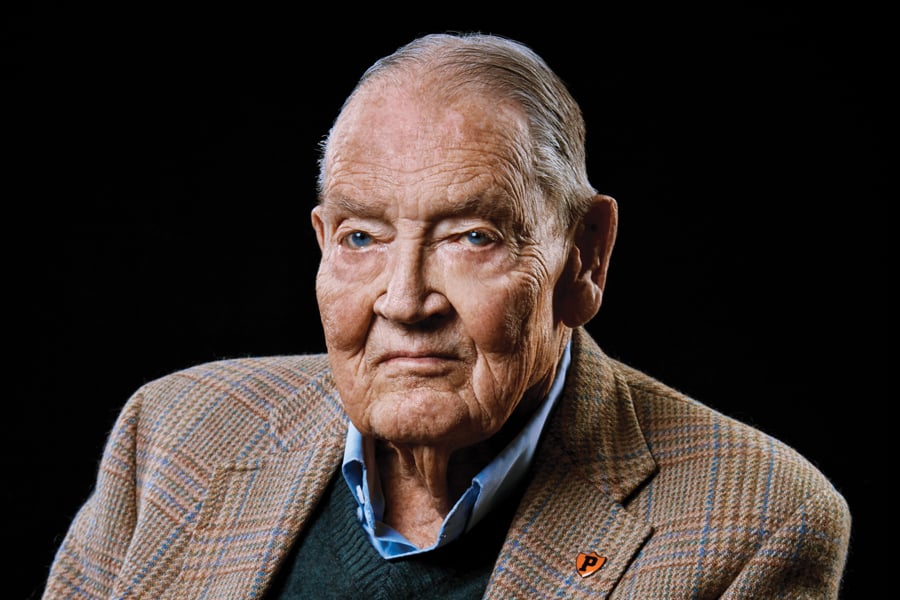
John Clifton Bogle
1929 - 2019
Founder of Vanguard Group
John Bogle created the first index fund available to individual investors in 1976, revolutionizing personal finance forever. Initially mocked as "Bogle's Folly," the Vanguard 500 Index Fund has since grown to over $800 billion, and index funds now hold over 50% of all U.S. equity fund assets. Bogle estimated that his invention has saved investors over $1 trillion in fees they would have otherwise paid to Wall Street.
Bogle's Most Powerful Quotes
"Don't look for the needle in the haystack. Just buy the haystack."
"Time is your friend; impulse is your enemy."
"In investing, you get what you don't pay for."
"The stock market is a giant distraction to the business of investing."
Why Bogle's Message Is Critical Today
High-Frequency Trading Dominates
Today's markets are dominated by algorithms executing millions of trades per second. For individual investors trying to compete, this environment makes Bogle's "don't try to beat the market" advice more relevant than ever. Index funds sidestep this arms race entirely.
Gamification of Trading Apps
Apps like Robinhood have made trading feel like a video game, encouraging speculation over investment. Bogle's principles are the antidote: boring, consistent, low-cost investing wins, while exciting "trading" typically leads to losses.
Social Media "Finfluencers"
The rise of financial influencers promoting complex strategies, options trading, and "get rich quick" schemes makes Bogle's simple message a crucial counterbalance. When everyone is shouting about the next hot stock, "just buy the index" is revolutionary.
Record-Low Fee Competition
Thanks to Bogle's legacy, investors now have access to funds with expense ratios as low as 0.00%—literally free. The Bogleheads movement forced the entire industry to compete on costs, saving ordinary investors billions annually.
The Bogleheads Community
Bogle inspired a global community of followers known as "Bogleheads" who advocate for low-cost, passive investing. The Bogleheads forum (bogleheads.org) offers free, unbiased investment advice to millions of investors seeking to follow Bogle's common-sense philosophy.
Quick Reference: Recommended Low-Cost Funds
U.S. Total Stock Market
Covers ~4,000 stocks
International Stocks
Developed + Emerging Markets
U.S. Total Bond Market
Government + Corporate Bonds
Disclaimer: This is educational content, not financial advice. Fund information is subject to change. Always verify current expense ratios and conduct your own research before investing.
Ready to Take Control of Your Financial Future?
The best time to start index investing was 20 years ago. The second best time is today. Apply Bogle's timeless principles and let compound interest work for you—not against you.